Past issueLatest issue →

What Runs Beneath the Surface

Lead story · The World01 / 11
The World31.9466° N, 35.3027° EWest BankIssue No. 2

Two killed in West Bank as violence escalates before Yom Kippur

An Israeli settler and a Palestinian driver were killed in separate shootings in the occupied West Bank on Sunday, as Israeli military officials warn the situation is spiraling out of control.

01What happened

A suspected Palestinian gunman shot dead an Israeli man near a settlement in the occupied West Bank on Sunday, according to Israeli officials. The occupied West Bank is a Palestinian territory that Israel has controlled since 1967. Israeli police said the gunman was located at a hospital in Ramallah, a Palestinian city in the central West Bank, and arrested. The army said a soldier had earlier shot and wounded the suspected assailant at the scene of the incident.

In a separate incident elsewhere in the West Bank, Israeli soldiers killed a Palestinian motorist. The Israeli military said the man was attempting to ram his vehicle into troops. The two killings came on the eve of Yom Kippur, the holiest day in the Jewish calendar.

France 24 correspondent Noga Tarnopolsky reported that violence in the West Bank is escalating at a very rapid pace. She said that all Israeli military authorities involved with the West Bank have been warning the Israeli government that the situation is basically out of control.

02What it means · The Griffin Read

Two deaths on Yom Kippur eve matter less than what surrounds them: Israeli military authorities reportedly telling their own government the West Bank is slipping beyond control. That military-political divergence—warnings unaddressed because the coalition depends on settler-aligned parties—is the durable signal, not the individual shootings.

Expect the vacuum left by an irrelevant Palestinian Authority to be filled by militants and settler vigilantes acting unilaterally, locking in a self-reinforcing cycle. Near-term risks: retaliatory 'price tag' attacks, hardened checkpoints, and expanded IDF raids around Ramallah timed to the holiday.

Note the framing contest itself: 'systemic breakdown' versus 'isolated law-enforcement incidents' will shape whether outside actors treat West Bank escalation as a distinct crisis or background noise to Gaza. Caveat: sourcing is secondary with unknown confidence, and attack characterizations rest on one-sided official framing.


THE WORLD
The World — Conflicts55.7558° N, 37.6173° EMoscowIssue No. 2

Ukraine strikes Moscow with drones as ruling party wins vote

Ukraine launched what Moscow's mayor called the largest drone barrage on the capital during Russia's parliamentary election, which exit polls show the ruling United Russia party winning with around 49.4 percent. Russia vowed to intensify strikes on Kyiv in response.

01What happened

Russia held the final day of its parliamentary elections on Sunday, and exit polls projected the ruling United Russia party on course to win around 49.4 percent of the vote, roughly the same share it achieved in the previous election. The party is the political vehicle of Russia's government, and the vote is tightly controlled, meaning the state manages who can run and how the process unfolds.

As Russians cast ballots, Ukraine fired waves of drones at Moscow and the surrounding region. Moscow's mayor said 450 drones were downed during the overnight barrage, which he described as the largest attack on the capital. Officials said the strikes killed people in the city, with reported death tolls of two to three, and set an oil refinery ablaze. An oil refinery is a plant that turns crude oil into usable fuel.

Russia's defence ministry accused Ukraine of trying to disrupt what it called the democratic will of Russian citizens and threatened to intensify its own strikes on military targets in Kyiv, Ukraine's capital. The vow signals that the exchange of long-range attacks between the two capitals is likely to escalate rather than ease.

02What it means · The Griffin Read

The headline outcome — United Russia's managed ~49% win — was never in doubt.

The signal is Ukraine's largest-yet drone barrage timed to the vote, demonstrating Kyiv can still mass strikes against Russia's most defended airspace and hit energy infrastructure. The refinery fire matters more than symbolism: it fits a sustained campaign to degrade Russian refining and export capacity as economic attrition.

But the Kremlin converts the military embarrassment into political leverage, framing the strikes as sabotage of 'democratic will' to justify escalating on Kyiv — cover for action likely planned regardless. This is an escalation ratchet, not a new phase: reciprocal deep strikes on capitals and energy grids, entrenching toward winter.

Note the asymmetry — Russia's insulated politics absorb damage; its economic exposure to refinery losses compounds slowly. Nearly all figures come from interested parties; treat drone counts and casualties as provisional.

THE WORLD
The World — Conflicts52.5200° N, 13.4050° EBerlinIssue No. 2

Merz calls state election losses a disaster but stays on

German Chancellor Friedrich Merz's centre-right party suffered its worst state result since World War Two, taking just 5 percent in Mecklenburg-Western Pomerania.

01What happened

Voters in two German states, Berlin and Mecklenburg-Western Pomerania, went to the polls on Sunday and handed a sharp rebuke to Chancellor Friedrich Merz's Christian Democratic Union, the centre-right party that leads the national government. Exit polls by the public broadcaster ARD showed the party finishing with just 5 percent in Mecklenburg-Western Pomerania, described as the lowest result the party has ever recorded in any state since the end of the Second World War. Merz himself called the outcome a disaster.

In Berlin, the far-left Linke party was on 24.5 percent, placing it ahead of both Merz's party and the AfD, the far-right Alternative for Germany party. Reporting on the two contests pointed to the AfD running ahead in the results, adding to the sense of a bruising night for the governing bloc.

Despite the setback, Merz vowed to remain in his post and to press ahead with what has been described as potentially painful reforms to Europe's biggest economy. He framed his response as a pledge to push on despite the defeats rather than change course.

02What it means · The Griffin Read

Merz's CDU took a genuine beating in state votes, but the specifics deserve scrutiny — a 5% CDU result in Mecklenburg-Western Pomerania is far below the party's historical floor there, and the claim of simultaneous Berlin/MV elections during Merz's chancellorship doesn't cleanly match Germany's electoral calendar. Treat the direction (a CDU setback, populist strength on both flanks) as plausible; treat the exact figures as unconfirmed exit-poll data from secondary sources.

The strategically important pattern, if real, is two-front erosion: Linke on the left, AfD on the right, squeezing the governing center in exactly the eastern states where reunification-era grievance runs deepest. Merz's bet to press painful reforms while his mandate erodes is the core tension — he is spending capital he may not have, raising coalition friction and questions over sustained defense and Ukraine commitments.

THE WORLD
The World — Conflicts24.7136° N, 46.6753° ERiyadhIssue No. 2

Houthis Strike Deeper Into Saudi Arabia as Their Power Grows

The Yemeni group says it targeted Riyadh with ballistic missiles and warns of more attacks, even as Saudi Arabia says it intercepted one aimed at the capital. A reported hit on a fuel depot at Riyadh's airport caused delays on Saturday.

01What happened

The Houthis, an armed group that controls much of Yemen, say they fired ballistic missiles at Saudi Arabia's capital, Riyadh. Ballistic missiles are long-range weapons that arc high before falling on a target. Saudi Arabia says it shot down one missile aimed at the capital, but a reported strike on a fuel depot at Riyadh's airport caused delays on Saturday. The group has warned it may launch further attacks on the kingdom.

The strikes come as the Houthis are widely seen as more powerful than before. After a run of battlefield gains in Yemen, the group's weight has grown within what Iran calls its axis of resistance, a network of allied armed groups across the region. Lebanon's Hezbollah was long considered the most significant member of that network. Analysts cited in the coverage now describe the Houthis as rising toward the top.

The open question is how Saudi Arabia, which has fought the Houthis for years, will respond to attacks reaching its capital and its main airport. The exchange also sits inside a wider confrontation between the United States and Iran, in which the Houthis have taken on a larger role.

02What it means · The Griffin Read

Missiles reaching Riyadh's airport—whether intercepted or landing—shift the Houthis from border nuisance to strategic threat inside Saudi Arabia's heartland. The military damage is disputed and likely modest; the reputational and psychological damage is real, striking directly at the Vision 2030 investor narrative that depends on uninterrupted capital and airport operations.

Riyadh faces a genuine dilemma: kinetic retaliation risks reigniting the costly Yemen war and fracturing the fragile Saudi-Iran detente, while absorbing strikes signals that expensive air defenses deter poorly against cheap asymmetric weapons. The Houthis have every incentive to keep this leverage active and periodic.

Treat the 'Houthis now rival Hezbollah' framing as analyst perception, not verified capability. Both sides' claims are self-interested; independent confirmation of the fuel-depot hit is absent.

INTELLIGENCE
Intelligence — AI37.5407° N, 77.4360° WRichmondIssue No. 2

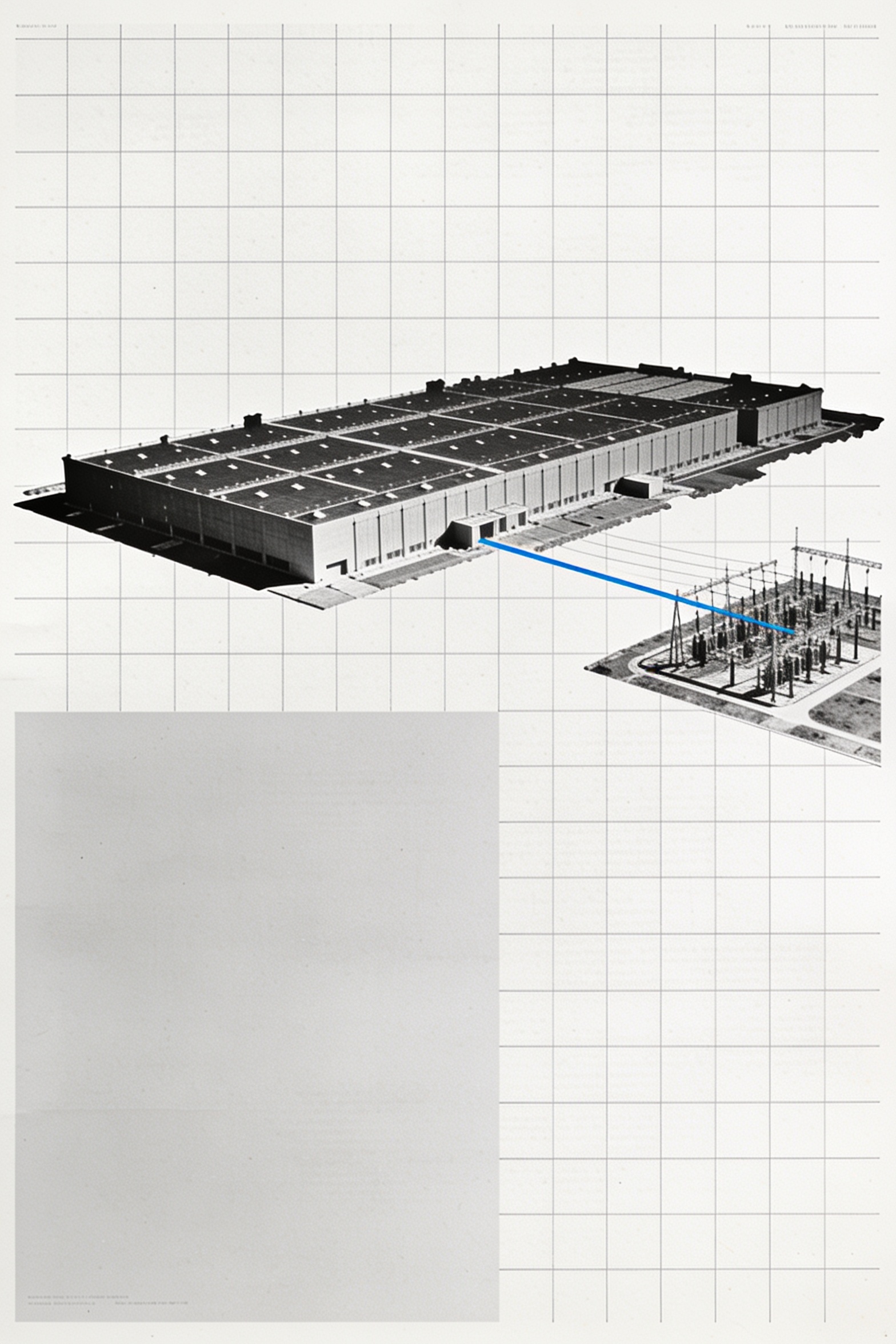
The Fight Over Who Pays for AI's Power Bill

As data centers strain the electric grid, lawmakers and regulators are moving to keep their costs off ordinary customers' bills. The US House passed a ratepayer protection bill, but analysts say it is unlikely to clear the Senate before the midterm elections.

01What happened

Data centers, the warehouse-sized buildings full of computers that run artificial intelligence, use enormous amounts of electricity, and a battle is underway over who covers that expense. In Virginia, the State Corporation Commission, the state body that regulates utilities, ordered that some transmission costs be assigned directly to the data centers themselves. Microsoft says it is preserving its ability to challenge that decision and has until November to formally appeal, while the utility Dominion Energy faces an October deadline to propose policy changes that comply with the order.

At the federal level, the House of Representatives passed a bill aimed at limiting so-called cost shifts, meaning the practice of spreading data center power costs onto everyday ratepayers. According to ClearView Energy Partners, a research firm, the bill would largely reinforce a shift already happening as more states adopt large-load tariffs, special rate structures for very big electricity users, and it is unlikely to pass the Senate before the midterm elections.

The pressure on the grid is also creating new business. Climavision, a weather forecasting company, says it can help data centers respond to changing weather as they are asked to take a more active role in managing the electric grid. The politics remain tangled: according to Wired, President Donald Trump has doubled down on data centers and AI even as his own political base moves in the opposite direction.

02What it means · The Griffin Read

The headline is the House bill; the real story is that power over AI's electricity costs has migrated to state utility commissions.

Virginia's SCC decision assigning transmission costs directly to data centers is a live precedent likely to be copied faster than any federal law moves — meaning large-load tariffs become the de facto national default regardless of Senate gridlock. This raises grid-connected compute costs, favoring cash-rich hyperscalers who can fight state-by-state rate cases while pushing everyone toward behind-the-meter generation (on-site gas, SMRs). A new intermediary layer (demand-response, grid-flexibility vendors) is forming.

Politically, visible bill increases open a populist affordability wedge that splits Trump's AI push from his base. Caveat: all sourcing is secondary and unverified; near-term outcomes hinge on Dominion's compliance filing and Microsoft's appeal, both unresolved.

INTELLIGENCE
Intelligence — Robotics44.9429° N, 123.0351° WSalem, Oregon (Agility Robotics HQ)Issue No. 2

Agility bets its new humanoid can work safely beside people

Agility Robotics says its latest humanoid worker, Digit 5, may be the first that is genuinely safe for people to walk past. The company frames the achievement as balancing three features that normally fight each other.

01What happened

Agility Robotics has announced Digit 5, its newest humanoid robot, which the company positions as potentially the first humanoid worker that is truly safe to operate around people. A humanoid robot, in this context, is a machine built roughly in the shape of a person so it can move through workplaces designed for human bodies.

The core challenge, as Agility describes it, is that three necessary qualities pull against one another. A robot must be powerful enough to do useful physical labor, safe enough that a person can walk past it without being harmed, and able to run long enough on a battery charge that it is not tethered to a charging station for much of the day. Making it stronger tends to make it more dangerous, and both power and safety measures can drain the battery faster.

This announcement lands against a backdrop of flashy demonstration videos, including humanoid robots doing backflips and kung fu, that Agility and others have circulated. The company suggests the real bottleneck has not been spectacle but the slower, harder work of building machines that can do economically valuable jobs at scale while remaining safe.

02What it means · The Griffin Read

Strip the hype and this is a vendor announcement, not a verified breakthrough.

Agility's real move is rhetorical: shift the humanoid-robotics competition away from viral demos (backflips, kung fu) toward 'certified safe to work beside'—a battlefield where its warehouse-pilot history may give structural advantage over spectacle-first rivals like Optimus, Figure, and Boston Dynamics. The engineering trilemma (power vs. safety vs. battery) is real; the claim that Digit 5 resolves it is entirely self-issued, hedged ('may be the first'), and unbacked by third-party certification or deployment data.

The true gating factor for scaled deployment isn't capability—it's liability, insurance underwriting, and collaborative-robot safety standards. Until independent validation or incident-free pilot hours appear, this functions primarily as a fundraising and narrative signal.

Watch whether previous pilot partners scale, or whether this joins the sector's pattern of claims outpacing shipped capability.

DISCLOSURE
Disclosure38.8951° N, 77.0364° WWashington, D.C.Issue No. 2

Sol Foundation Praises Government Release of UAP Records

A group of scientists and a retired admiral advising the executive branch issued statements welcoming two presidential releases of unidentified anomalous phenomena records in May 2026. The releases came on May 8 and May 22, according to the foundation.

01What happened

The Sol Foundation, whose leadership says it advises the executive branch, published statements responding to what it calls historic presidential releases of records on unidentified anomalous phenomena, the government's term for sightings once described as unidentified flying objects. The foundation dated one release to May 8, 2026, and a second to May 22, 2026.

The statements are attributed to three figures the foundation identifies as its leadership: Rear Admiral Tim Gallaudet, a retired officer and former acting administrator of the National Oceanic and Atmospheric Agency; Dr. Garry Nolan, a professor at the Stanford University School of Medicine; and Dr. Peter Skafish, described as a recent visiting anthropologist at Harvard.

The foundation also points to outside stakeholders in its work, naming journalist Leslie Kean and Jacques Vallée among those associated with its mission. Beyond the attributions and dates, the foundation's posted excerpts do not spell out what the released records contain.

02What it means · The Griffin Read

The story here is structural, not substantive.

A body that says it advises the executive branch is praising records released by that same branch — a closed validation loop with no independent party confirming what was actually disclosed. None of the sources show the records themselves; every source traces back to the Sol Foundation's own statements.

That lets a disclosure narrative advance on credentialed messengers (a retired admiral, a Stanford professor, a Harvard-affiliated anthropologist) rather than verifiable content, cementing the foundation as interpretive gatekeeper between government and public. Expect media and political actors to treat 'records released and praised' as functionally equivalent to 'disclosure occurred,' reducing pressure for substantive follow-through.

The setup is fragile: a single credible leak showing the records are mundane or recycled would collapse it. Treat this as a claim about disclosure, not proof of disclosure.

MONEY
Money — CryptoIssue No. 2

Grayscale Splits Its Zcash Fund After a Cash Rush

Grayscale is dividing each share of its Zcash exchange-traded fund into three, a move that follows more than 233 million dollars flowing in during under a month. The fund now holds close to 890 million dollars in assets.

01What happened

Grayscale, an asset manager that packages cryptocurrencies into products that trade on stock exchanges, has filed to run what is called a 3-for-1 forward share split on its Zcash ETF, which trades under the ticker ZCSH. An exchange-traded fund, or ETF, is a basket that ordinary investors can buy and sell like a stock. A forward split means the fund carves each existing share into smaller pieces, lowering the per-share price without changing the total value an investor holds. In this case, at the close of trading on September 28, shareholders will receive two extra shares for every one they already own.

The split arrives after a burst of demand. The fund pulled in more than 233 million dollars in under a month and is nearing 890 million dollars in total assets. Zcash, known by its trading symbol ZEC, is a privacy-focused cryptocurrency, meaning it is designed to hide transaction details rather than post them openly on a public ledger. Its price has been climbing, and that rally has pushed competition among the computers that process and secure the network, known as mining, to record highs.

Splitting shares does not add new money or change the fund's underlying holdings. It simply makes each share cheaper to buy, a tactic often used to keep a fast-rising product within reach of smaller buyers. Grayscale's move signals confidence that the wave of interest in privacy-focused crypto has room to run.

02What it means · The Griffin Read

Grayscale's 3-for-1 split on its Zcash ETF (ZCSH) is a cosmetic maneuver dressed as a demand signal.

The split moves no capital and changes nothing the fund owns; it simply lowers per-share price to widen the retail base right after a reported $233M inflow surge toward ~$890M AUM. The real event is that money, which likely forced ZEC purchases into a thin float. Grayscale is locking in an 'unstoppable demand' narrative before testing whether the appetite is durable or momentum-driven.

Strategically it stakes first-mover branding in a new privacy-coin ETF category, likely inviting copycat filings. The core tension: shielding-based privacy assets sit awkwardly inside a transparent, regulated wrapper, inviting AML scrutiny as inflows scale.

Downside risk skews to newly onboarded retail buyers entering near a possible local top. All figures rest on secondary sources of unstated confidence—plausible but uncorroborated by the primary filing.

INTELLIGENCE
Intelligence — AIIssue No. 2

OpenAI Builds Its First Chip to Cut Reliance on Nvidia

OpenAI unveiled its debut in-house processor, called Jalapeño, claiming it answers prompts up to 3.6 times faster than the Nvidia chip the company currently depends on. The move signals an attempt to loosen its dependence on the outside supplier that powers its systems.

01What happened

On the twenty-fifth of August, OpenAI fully unveiled Jalapeño, its first AI accelerator, meaning a chip built specifically to run the heavy math behind artificial intelligence. According to the company, the chip delivers up to 13.4 petaflops of what is known as 4-bit compute, a measure of how many simplified calculations it can perform each second, and it can reach 232 gigabytes of the most advanced memory available, drawing on that memory at 15.4 terabytes per second.

The headline claim is about speed. OpenAI says Jalapeño can cut end-to-end latency, the gap between when a user types a prompt and when the system produces its final word, by as much as 3.6 times compared with Nvidia's GB300, the chip OpenAI currently relies on. The company says it does this while using less power. Building its own silicon would let OpenAI depend less on Nvidia, which supplies much of the hardware the AI industry runs on.

Notably, these are the company's own benchmarks, and whether the numbers hold up once the chip enters wider service remains an open question. Designing a chip in-house is one of the clearest signs yet of how far the leading AI firms are willing to go to control their supply chains rather than buy hardware from a single dominant vendor.

02What it means · The Griffin Read

Treat this as a leverage play first, a technical event second — and treat the specifics with real caution.

If genuine, OpenAI's in-house accelerator ("Jalapeño") matters less for its self-reported 3.6x latency claim than for what announcing it does: it changes OpenAI's bargaining position with Nvidia on pricing, allocation, and roadmap access, and pulls the largest single Nvidia customer into the custom-silicon camp already occupied by Google, Amazon, Meta, and Microsoft. But dependency shifts rather than disappears — a foundry (likely TSMC) and design partner replace Nvidia as the chokepoint.

Every performance figure originates from OpenAI, unverified. Sourcing quality is weak, including one wholly irrelevant citation, so the announcement's exact form is not confirmable.

The structural signal underneath is real regardless: deployment speed compounds faster than interpretability and safety understanding.

THE WORLD
The World — The margin35.6892° N, 51.3890° ETehranIssue No. 2

Iran shuts French embassy language centre in Tehran

Iran closed a French-linked language centre in Tehran, and France has vowed to summon Iran's ambassador in response. Iranian authorities called the centre illegal, saying it had operated for years under the guise of language instruction.

01What happened

Iranian authorities have sealed a language centre affiliated with the French embassy in Tehran, according to the Tehran prosecutor's office. The judiciary's Mizan news website reported that the centre was deemed illegal and had, in the prosecutor's words, operated for years under the guise of language instruction. A language centre is a facility that teaches a foreign language, in this case French, often to local students.

France responded quickly. The French Foreign Ministry said on Sunday that it would summon Iran's ambassador, meaning it would formally call the envoy in to register its objection, and would take what it described as appropriate measures. To summon an ambassador is a standard diplomatic signal of displeasure, short of severing ties.

The dispute unfolds against the backdrop of United Nations diplomacy, where the French statement was issued on September 20. The closure and the promised response mark a fresh point of friction between Tehran and Paris, played out through their embassies and cultural institutions rather than at the negotiating table.

02What it means · The Griffin Read

A shuttered French language centre is a proxy skirmish, not the story.

The real board is the Iran-France nuclear track, and the September timing points to E3 snapback pressure. Iran weaponizes domestic legal process — "illegal for years, under the guise of language instruction" — to squeeze Western soft-power infrastructure with plausible deniability.

France answers with the minimal tool: summoning an ambassador. This is calibrated, deniable signaling by both sides that want displeasure registered without severing channels needed elsewhere.

The asymmetry matters: Iran acts and controls the narrative; France reacts symbolically unless it coordinates harder measures through the EU/E3. Watch for reciprocal closures, a chill on exchange programs, and — flagged as speculation, not fact — any intersection with detained foreign nationals. Note the thin sourcing: two adversarial official narratives, no independent verification of the underlying allegations or whether the summons occurred.

THE WORLD
The World — Tech & power48.8566° N, 2.3522° EParisIssue No. 2

A global reporting effort probes secret US deportation deals

A consortium of 72 journalists from 26 media outlets, coordinated by the nonprofit Forbidden Stories, spent months investigating agreements the Trump administration made to expel people from the United States. The findings, known as the Deportation Project, are set to be published on Monday.

01What happened

According to France 24, a group of 72 journalists working across 26 media outlets joined forces under the coordination of Forbidden Stories, a Paris-based organization that continues the work of reporters who have been threatened or killed. Their collaboration, called the Deportation Project, has been underway for months.

The reporting focuses on what France 24 describes as the Trump administration's secret deals to expel people worldwide. In practical terms, that means agreements the United States government has struck to send people out of the country, arrangements that the coalition says had not been fully disclosed to the public.

The full investigation is scheduled to be released on Monday, when the consortium says it will take readers inside those arrangements. The excerpt available so far describes the scope of the effort and its timing, but does not lay out the specific findings.

02What it means · The Griffin Read

The story to watch is not yet published — it's the architecture of its release.

Routing a 72-journalist, 26-outlet investigation through Forbidden Stories replicates the Pegasus-style distributed model, whose purpose is to make simultaneous multi-jurisdiction publication a shield against injunction, suppression, or discrediting by any single government. That is the real signal: adversarial journalism on immigration secrecy is professionalizing its defenses.

If the findings concern third-country removal deals, the structural vulnerability exposed is that such executive-to-executive agreements can be struck without congressional notification or public disclosure — and may overlap with security cooperation (basing, aid, overflight) in partner states. But everything substantive is embargoed until Monday.

No countries, deals, or figures are public. The 'why it matters' framing is anticipatory, not evidentiary.

Judge the story on Monday's documents, named agreements, and official confirmations — not the pre-publication promotion.