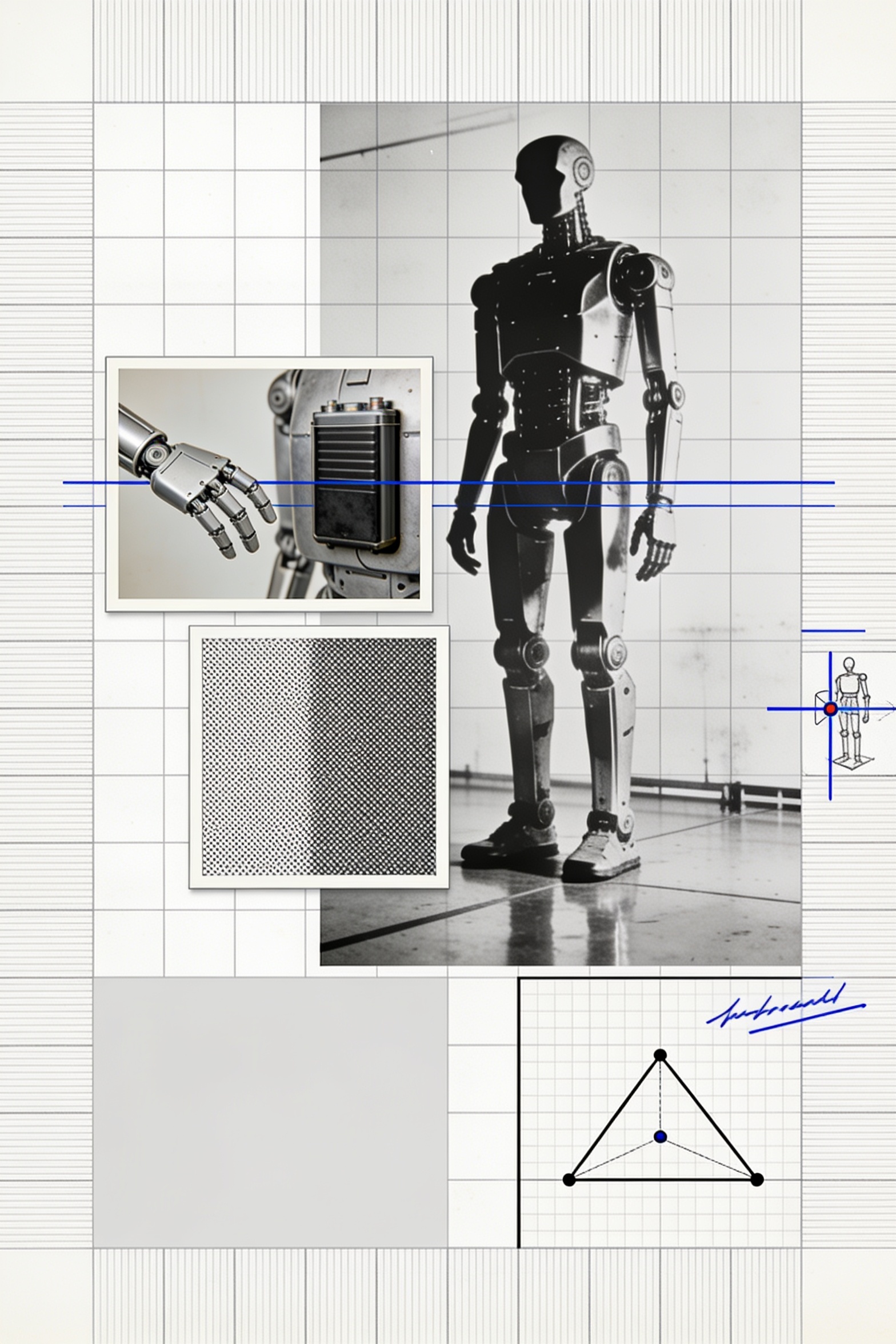
Agility Robotics has announced Digit 5, its newest humanoid robot, which the company positions as potentially the first humanoid worker that is truly safe to operate around people. A humanoid robot, in this context, is a machine built roughly in the shape of a person so it can move through workplaces designed for human bodies.
The core challenge, as Agility describes it, is that three necessary qualities pull against one another. A robot must be powerful enough to do useful physical labor, safe enough that a person can walk past it without being harmed, and able to run long enough on a battery charge that it is not tethered to a charging station for much of the day. Making it stronger tends to make it more dangerous, and both power and safety measures can drain the battery faster.
This announcement lands against a backdrop of flashy demonstration videos, including humanoid robots doing backflips and kung fu, that Agility and others have circulated. The company suggests the real bottleneck has not been spectacle but the slower, harder work of building machines that can do economically valuable jobs at scale while remaining safe.
Safety is the gating factor for putting humanoid robots into real workplaces alongside people. If Agility has actually balanced strength, safety, and battery life, it moves humanoids closer to steady paid work rather than viral demonstration clips.
The claim is Agility's own framing of a product it just announced, not an independent verification. The excerpts note that the pace of progress toward economically viable humanoids has at times seemed plodding, and no outside test or deployment results are provided to confirm that Digit 5 is in fact safe enough to work among people.
Strip the hype and this is a vendor announcement, not a verified breakthrough. Agility's real move is rhetorical: shift the humanoid-robotics competition away from viral demos (backflips, kung fu) toward 'certified safe to work beside'—a battlefield where its warehouse-pilot history may give structural advantage over spectacle-first rivals like Optimus, Figure, and Boston Dynamics. The engineering trilemma (power vs. safety vs. battery) is real; the claim that Digit 5 resolves it is entirely self-issued, hedged ('may be the first'), and unbacked by third-party certification or deployment data. The true gating factor for scaled deployment isn't capability—it's liability, insurance underwriting, and collaborative-robot safety standards. Until independent validation or incident-free pilot hours appear, this functions primarily as a fundraising and narrative signal. Watch whether previous pilot partners scale, or whether this joins the sector's pattern of claims outpacing shipped capability.
Uncertainty: High confidence only that the announcement occurred. Low confidence that Digit 5 is meaningfully safer than competitors in real conditions—no independent testing, certification, deployment data, or agreed definition of 'safe to walk past' is provided. Sourcing is thin, drawn from aggregator coverage flagged as secondary with unknown confidence. Battery endurance for a full shift and 'economically valuable work at scale' are assumed, not demonstrated.