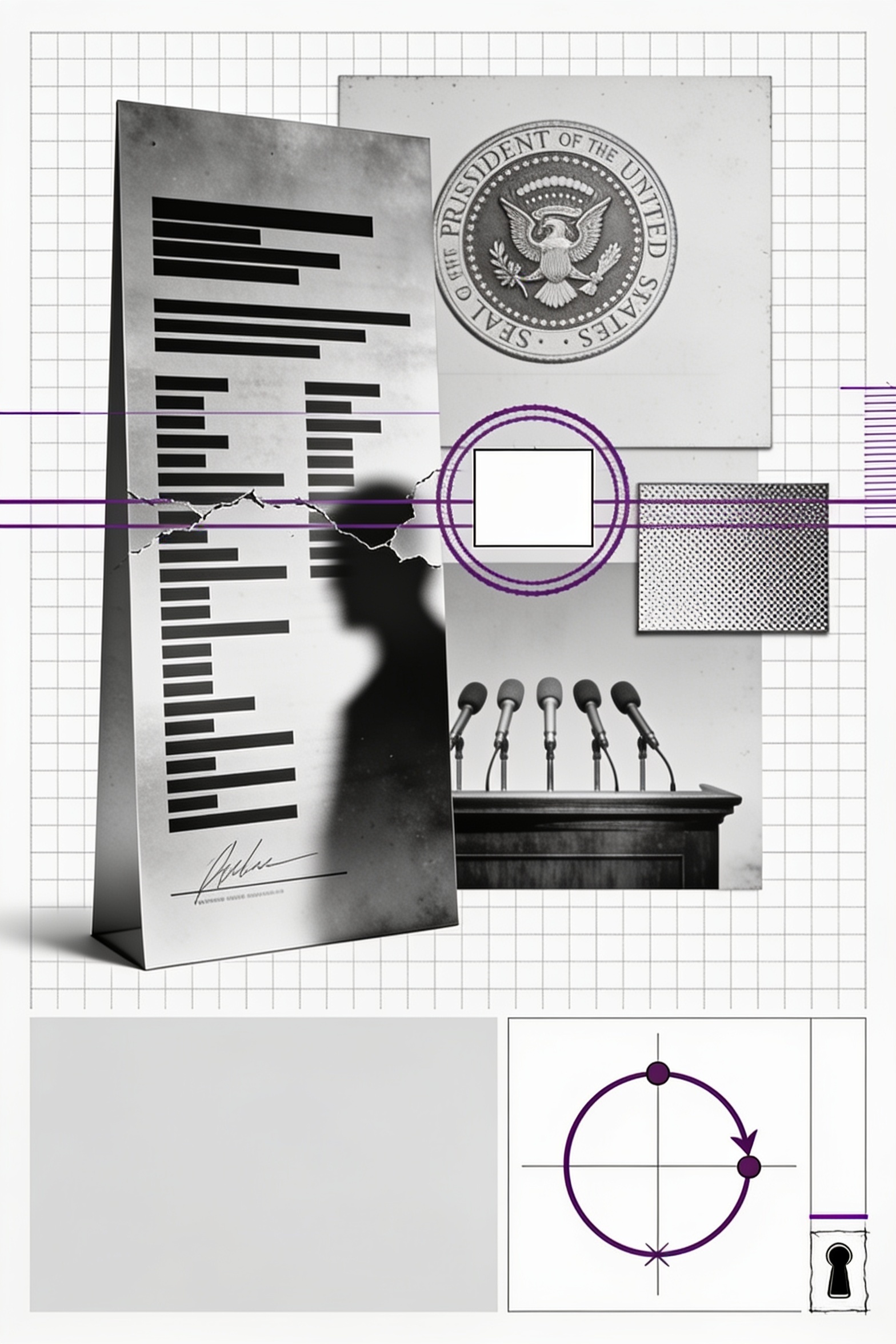
The Sol Foundation, whose leadership says it advises the executive branch, published statements responding to what it calls historic presidential releases of records on unidentified anomalous phenomena, the government's term for sightings once described as unidentified flying objects. The foundation dated one release to May 8, 2026, and a second to May 22, 2026.
The statements are attributed to three figures the foundation identifies as its leadership: Rear Admiral Tim Gallaudet, a retired officer and former acting administrator of the National Oceanic and Atmospheric Agency; Dr. Garry Nolan, a professor at the Stanford University School of Medicine; and Dr. Peter Skafish, described as a recent visiting anthropologist at Harvard.
The foundation also points to outside stakeholders in its work, naming journalist Leslie Kean and Jacques Vallée among those associated with its mission. Beyond the attributions and dates, the foundation's posted excerpts do not spell out what the released records contain.
For years, advocates have pushed the United States government to make its files on unexplained aerial sightings public. A pair of presidential records releases, welcomed by a foundation that says it advises the executive branch, marks a rare moment where that demand appears to be answered on the record.
The excerpts show statements praising the releases but do not show the records themselves or any independent verification of what they reveal. A carefully staged pair of releases, applauded by a foundation that advises the same executive branch, is a claim about disclosure, not proof that anything substantive was disclosed.
The story here is structural, not substantive. A body that says it advises the executive branch is praising records released by that same branch — a closed validation loop with no independent party confirming what was actually disclosed. None of the sources show the records themselves; every source traces back to the Sol Foundation's own statements. That lets a disclosure narrative advance on credentialed messengers (a retired admiral, a Stanford professor, a Harvard-affiliated anthropologist) rather than verifiable content, cementing the foundation as interpretive gatekeeper between government and public. Expect media and political actors to treat 'records released and praised' as functionally equivalent to 'disclosure occurred,' reducing pressure for substantive follow-through. The setup is fragile: a single credible leak showing the records are mundane or recycled would collapse it. Treat this as a claim about disclosure, not proof of disclosure.
Uncertainty: High. The May 2026 release dates and the foundation's claimed advisory relationship are attested only by the interested party and are future-dated relative to reliable knowledge. Nothing about record contents is established; only that statements were published. A minor error (NOAA rendered as 'Agency') suggests loose source scrutiny. The excerpts cannot distinguish genuine advocacy from coordinated narrative management.